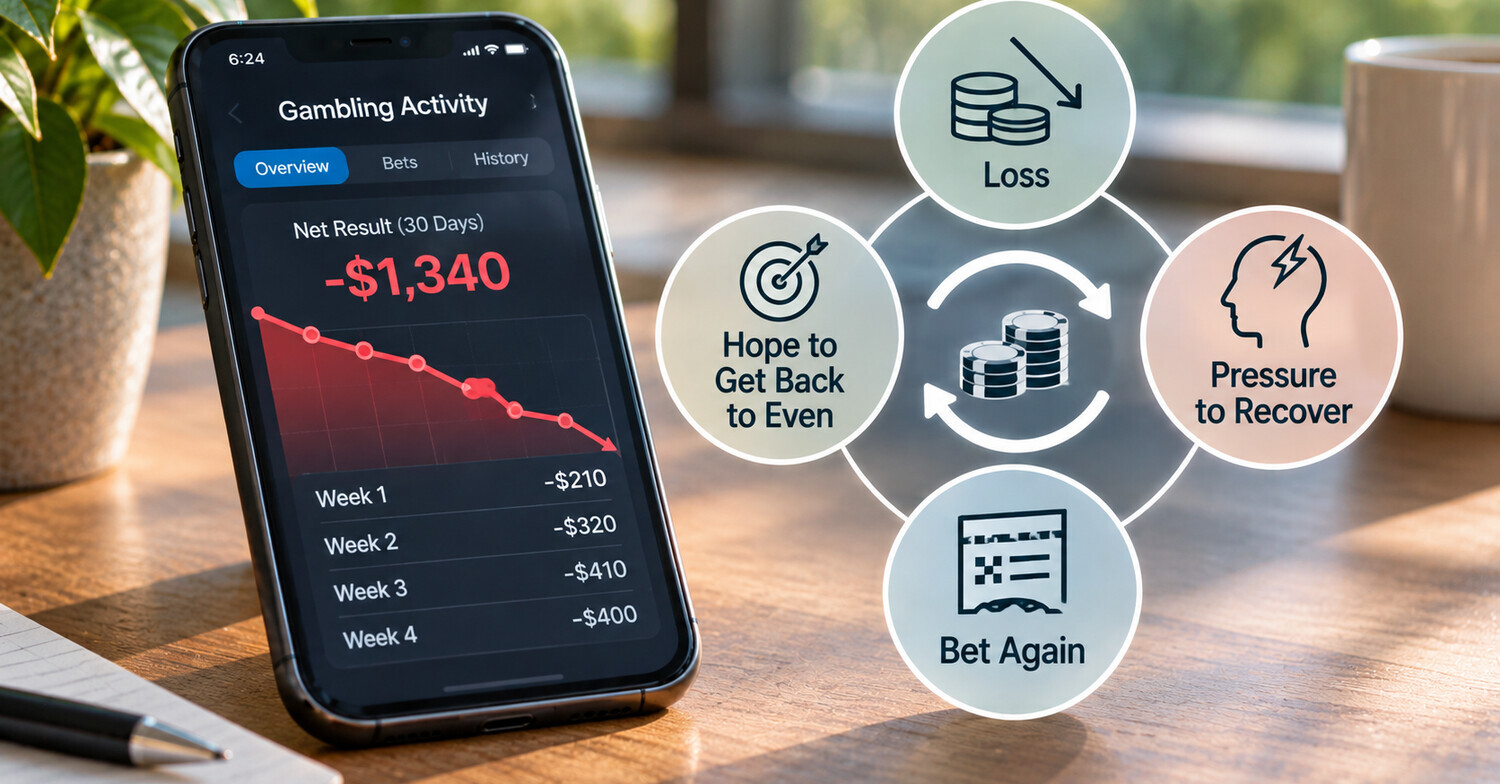
Losing money through gambling can be upsetting. For some people, the disappointment ends when they stop playing and accept the loss as part of the activity. For others, losing creates a powerful urge to continue gambling, sometimes with larger amounts of money or greater urgency than they originally intended.
The belief that one more bet could recover the money may make it difficult to stop. A person may recognize the risks yet feel unable to accept the financial consequences of stopping. What began as entertainment can become an attempt to repair the consequences of gambling through more gambling. This pattern, commonly known as chasing losses, can contribute to escalating financial difficulties, emotional distress, and a growing sense that stopping is no longer a realistic option.
What Does Chasing Gambling Losses Mean?
Chasing losses refers to returning to gambling or continuing to gamble in an attempt to recover money previously lost. It may happen during a single session or across several days, weeks, or longer periods.
Consider someone who plans to spend $100 gambling. After losing that money, they deposit another $100, hoping to recover the original loss. When that money is also lost, they increase their next wager because a larger win now seems necessary to break even. By the end of the session, their losses may be considerably greater than the amount they originally intended to spend. The same motivation can extend beyond a single session: a person may lose money on a Friday and return the following week, motivated less by enjoyment than by the need to make up for what happened.
The distinction often lies in the purpose behind the next wager. A person may gamble again because they enjoy the activity and have independently decided that the expense is acceptable. When chasing losses, they are increasingly motivated by recovering previous losses. These motivations can also coexist, making the pattern less obvious.
Chasing losses is an important clinical concern, but it does not automatically establish that someone has a gambling disorder. Its frequency, severity, consequences, and broader behavioural context matter when determining whether additional assessment or support is appropriate.
Why Losing Money Can Create Pressure to Keep Gambling
A financial loss is not always experienced as a simple reduction in someone's bank balance. It may represent lost security, missed opportunities, or an unexpected threat to responsibilities they need to meet. Losing money intended for recreation may bring disappointment or frustration; losing money needed for rent, groceries, or debt repayment may create fear and urgency. In the second situation, gambling may begin to feel like a possible solution to a problem that gambling itself created.
For some individuals, this pressure is not primarily based on believing that a win is likely. They may understand that the odds are against them but feel unable to identify another way to replace the money. Faced with an overdue bill, for instance, a person may believe that stopping means they cannot pay it, while continuing offers at least a chance of recovering the money. An uncertain outcome can begin to feel preferable to confronting an immediate financial consequence. The financial problem is real, even when gambling is unlikely to resolve it, and telling someone to simply accept their losses may overlook the immediate difficulties they are facing.
Previous gambling experiences can also shape these decisions. A person who has recovered substantial losses in the past may remember those occasions more readily than the times continued gambling resulted in further losses. Those experiences can strengthen the expectation that recovery is possible, even though previous outcomes do not improve the likelihood of winning future independent wagers.
Alongside financial pressure and past experience, the emotional impact of losing also matters. Loss aversion describes a tendency for losses to carry greater psychological weight than equivalent gains. Losing $500, for example, may feel more distressing than winning $500 feels satisfying. This does not, by itself, explain chasing losses, but it helps illustrate why accepting a loss can be difficult. Continuing to gamble may allow someone to postpone confronting regret, guilt, or anxiety by holding on to the possibility that the loss can still be reversed. That possibility can provide temporary emotional relief, even when further gambling creates additional financial risk.
How Thinking Patterns Can Keep the Cycle Going
Chasing losses can involve several patterns of thinking that make continued gambling seem more reasonable or necessary than it is. One is the belief that a win is becoming more likely because of previous losses: after several unsuccessful bets, a person may feel they are due for a win. This is commonly associated with the gambler's fallacy—the mistaken expectation that previous independent random outcomes change the probability of future outcomes. A roulette wheel landing on red several times, for example, does not make black more likely on the next spin when the outcomes are independent.
Attention may also shift toward how close a person has come to winning. Near misses can make success feel within reach, even when they do not provide reliable information about what will happen next. A different focus is the amount needed to break even. Rather than evaluating whether another wager is affordable or consistent with their original intentions, a person may begin calculating how much they would need to win to erase their losses.
The focus on previous losses can also involve the sunk cost fallacy. This occurs when previous investments of money, time, or effort influence someone to continue an activity, even though those past investments should not determine the next decision. Money lost on a previous wager cannot be retrieved by reversing that wager. Although a later win might offset earlier losses financially, another bet introduces new risk without guaranteeing any recovery.
These thinking patterns are not evidence that someone lacks intelligence or understands nothing about probability. People may recognize the risks intellectually while finding it difficult to act on that understanding when experiencing distress, urgency, or strong expectations about recovering their losses. Recognizing these patterns can help them distinguish decisions based on their present circumstances from those driven by the desire to undo the past.
When Chasing Losses Creates More Harm
Chasing losses can create a cycle in which the consequences of gambling become reasons to continue. Each additional loss may increase the amount someone feels compelled to recover. This process can contribute to spending beyond intended limits, using money reserved for essential expenses, borrowing, or accumulating debt. In some circumstances, individuals may access credit or financial assistance while believing that future gambling winnings will allow them to repay what they owe.
The effects can extend beyond finances to emotional well-being and relationships. A person may experience anxiety, shame, or frustration, become preoccupied with gambling outcomes, or withdraw from others because they fear criticism. Financial difficulties may be concealed, commitments broken, or gambling may become a source of ongoing conflict.
Even a substantial win does not necessarily resolve the underlying pattern. Recovering previous losses may provide immediate relief and reinforce the belief that continuing to gamble was the correct decision. A person who loses $1,000 and then wins it back may feel that chasing was successful because they finished without a net loss. However, breaking even does not mean the additional gambling was without risk: they exposed themselves to the possibility of losing considerably more money, and the successful recovery may increase their willingness to repeat the same behaviour. Both outcomes can maintain the pattern—further losses intensify the pressure to continue, while a successful recovery can reinforce chasing as a response to future losses.
Recognizing the Pattern and Finding a Way Forward
Recognizing chasing losses begins with examining what motivates someone to continue gambling after losing. A useful question is whether they would still choose to place the next wager if recovering previous losses were not part of the decision. If the primary motivation is to break even, repair financial consequences, or avoid accepting a loss, that may indicate that chasing is influencing their behaviour.
Other questions worth considering include:
-
Have I continued gambling after reaching a spending limit because I wanted to recover my money?
-
Have I increased my wagers after losing?
-
Do I find myself planning future gambling around the amount I need to win back?
-
Have previous wins made me more confident that I can recover future losses?
-
Am I relying on possible gambling winnings to address financial responsibilities?
These questions are intended to encourage reflection, not to diagnose a gambling disorder.
For someone who recognizes a pattern of chasing, an important step may be separating the financial problem from the gambling behaviour. Practical strategies may include taking a break from gambling, restricting access to gambling funds, using available gambling blocking or self-exclusion tools, and developing a realistic plan for managing financial obligations without relying on gambling winnings.
Within that plan, protecting money needed for essential expenses can be particularly important. Depending on the individual's circumstances, this might involve separating household funds from discretionary spending, arranging automatic payment of essential bills, or voluntarily asking a trusted person to help manage access to money while they work toward greater stability. Such arrangements should be collaborative, respect the person's autonomy, and avoid exposing them to financial control or exploitation.
The usefulness of safeguards also depends on the person's experience with them. For someone who repeatedly exceeds spending limits while chasing losses, establishing another limit may not provide sufficient protection. If previous safeguards have consistently failed, abstinence may be a safer and more realistic approach, particularly when chasing has contributed to serious financial consequences or ongoing harm.
Alongside changes to gambling behaviour, financial stabilization may require attention. Credit counselling, financial planning, or other appropriate services can help someone understand their obligations and identify options for addressing debt, overdue bills, or financial instability. Where essential needs are at risk, practical assistance may be urgent. Identifying alternatives to gambling can reduce the feeling that winning is the only available solution.
Counselling can also help individuals explore the emotional responses, expectations, and circumstances contributing to chasing losses. This may involve examining gambling-related thinking patterns, developing strategies for responding to urges, addressing financial anxiety, and identifying recovery goals that meaningfully reduce harm.
Accepting a gambling loss can be difficult, especially when the consequences are significant. However, accepting that the money has been lost does not mean that nothing can be done about those consequences. Financial difficulties can be addressed through planning, support, and practical changes, even when the solutions are slower or more difficult than someone hoped.
The money already lost cannot be changed by another bet. Recognizing the urge to chase losses creates an opportunity to make decisions based on what can still be protected, rather than what someone hopes to win back.

Michael Fish
Contact Me