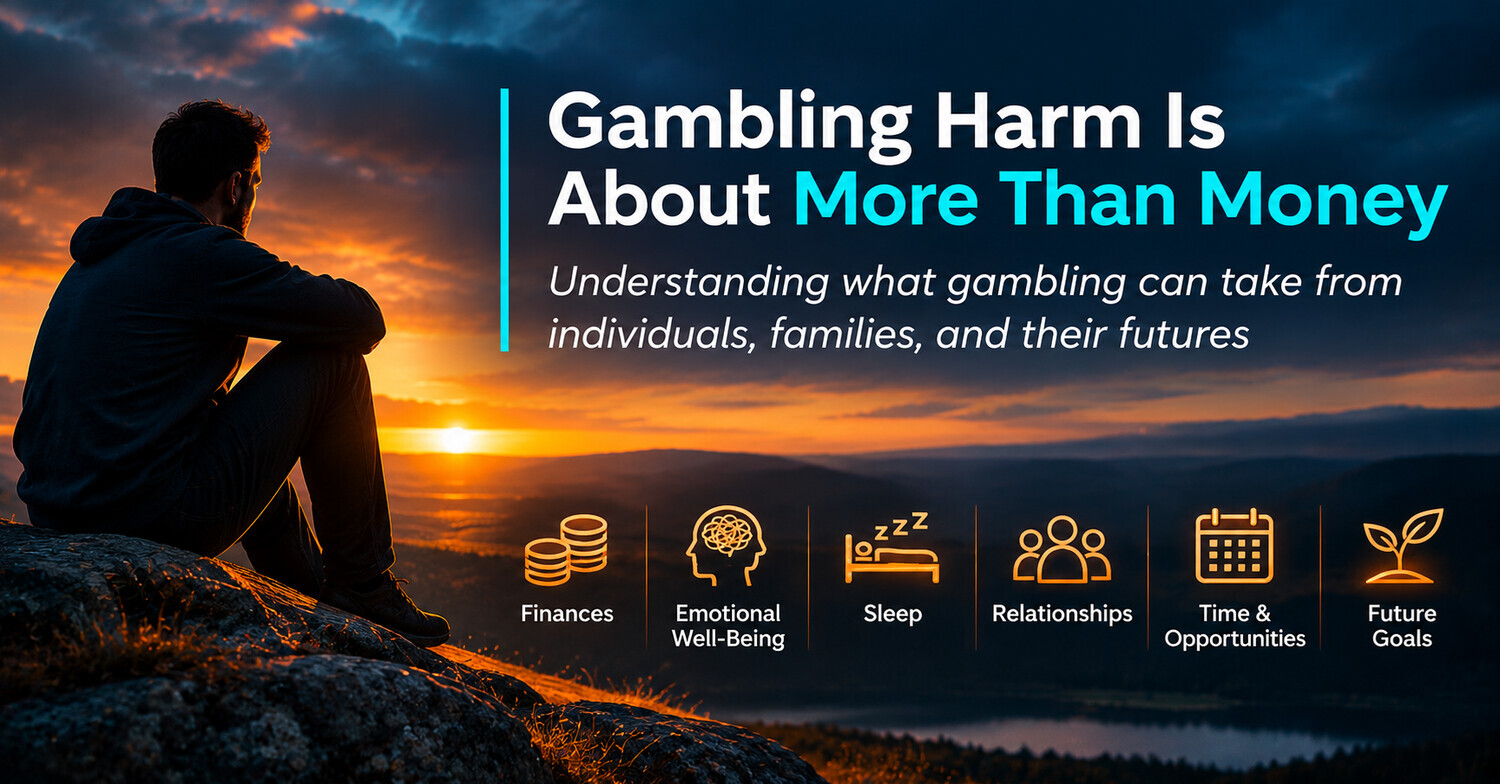
When we talk about the harm caused by gambling, the conversation often begins with money. How much has someone lost? How much debt have they accumulated? Have they used their savings or fallen behind on bills? These are important questions: financial losses can have serious consequences for individuals and families. However, money is only one part of the picture.
Gambling can also affect someone's emotional well-being, relationships, sleep, and everyday life. These consequences may develop gradually, sometimes long before a financial crisis occurs. A person may continue working, paying bills, and meeting responsibilities while privately struggling with gambling. Understanding gambling-related harm therefore means considering how gambling affects someone's life, what their losses represent, and what may be happening beyond their finances.
When Does Gambling Become Harmful?
For some people, gambling remains an occasional recreational activity. For others, it gradually begins to interfere with areas of life they value. They might notice that they are spending more time gambling than intended, thinking about it throughout the day, or struggling to follow limits they previously established. Staying awake later to gamble or monitor outcomes, becoming distracted during family activities, or feeling increasingly anxious about gambling may also signal a change.
Sometimes these changes are subtle. A person may still be meeting their responsibilities but recognize that gambling is taking up more of their attention or emotional energy than they would like.
Warning signs may include:
-
Spending money intended for essential expenses.
-
Borrowing money or using credit to continue gambling.
-
Concealing gambling activity or financial losses.
-
Repeatedly exceeding personal gambling limits.
-
Gambling to recover money previously lost.
-
Experiencing conflict, distress, or disrupted sleep related to gambling.
These experiences do not automatically mean someone has a gambling disorder. However, they may indicate that gambling is contributing to harm or that further assessment would be useful. Their significance depends on the person's circumstances and the consequences involved. A useful question is not simply how much someone gambles, but how gambling is affecting their life.
Money Represents More Than a Financial Loss
Although gambling-related harm extends beyond money, financial consequences remain important. Money provides security, independence, and opportunities. It allows people to maintain housing, purchase food, care for their families, and plan for the future. Losing money through gambling may also mean losing the opportunities it represented.
Consider two people who each lose $5,000. One may have substantial savings and experience relatively limited financial consequences, while the other may have used money intended for rent, household expenses, or debt repayment. The amount lost is identical, but the consequences are very different. Even when someone can afford a financial loss, they may still experience emotional distress, relationship difficulties, or other forms of harm.
For some people, gambling losses create immediate instability. They may struggle to pay bills, accumulate debt, or rely on others for financial assistance. For others, the consequences are less immediate but still meaningful. Savings may be depleted, retirement plans delayed, or opportunities to travel, purchase a home, or support their family affected. Understanding financial harm requires looking beyond the amount lost to consider what that money meant in the individual's circumstances.
Financial losses can also become a reason to continue gambling. Someone may believe that winning back what they have lost is the only way to repair their financial situation. This pattern, known as chasing losses, can deepen the difficulties they are trying to resolve.
The Emotional and Relationship Consequences
Gambling-related harm can affect how someone feels about themselves and how they relate to others. Anxiety, guilt, shame, frustration, or regret may accompany worries about financial consequences, embarrassment about gambling decisions, or fear of how loved ones will respond if they discover what has happened. These emotions can make it difficult to acknowledge concerns or seek support, and may lead a person to conceal gambling activity, avoid conversations about money, or withdraw from people they care about.
For some individuals, gambling provides temporary relief from difficult emotions. It may feel exciting or distracting during periods of stress, loneliness, or boredom. However, when gambling contributes to additional difficulties, the circumstances they were trying to escape may become more challenging. Not everyone who experiences gambling-related harm is gambling to cope. People gamble for different reasons, and understanding those reasons can help explain the circumstances contributing to their difficulties.
Relationships can also be affected. Concealed gambling, broken commitments, and uncertainty about finances may damage trust between partners, family members, or friends. Loved ones may feel hurt, confused, or uncertain about what to believe. The person gambling may also lose confidence in themselves, particularly when they repeatedly struggle to maintain limits or follow through on decisions.
These consequences can continue even after someone reduces or stops gambling. Rebuilding trust often requires time, consistency, and a willingness to address what has happened. Financial repayment may address an important consequence of gambling, but it does not necessarily repair the emotional and relational harm someone has experienced.
The Time and Opportunities Gambling Can Take
Not all gambling-related losses appear on a bank statement. Gambling can affect how someone spends their time and participates in everyday life. Staying awake longer than intended to gamble or monitor outcomes may disrupt sleep, as can worries about financial consequences or preoccupation with future gambling opportunities. Over time, disrupted sleep can affect concentration, mood, and the ability to manage daily responsibilities.
Gambling may also gradually replace activities someone previously enjoyed. A person may spend less time with family, withdraw from friendships, or lose interest in hobbies. Even when physically present, they may be distracted by gambling-related thoughts. These changes can develop gradually enough that they do not immediately recognize how much time they have spent gambling or how many opportunities they have missed.
For some people, recognizing these losses brings feelings of grief. They may grieve financial security, damaged relationships, missed experiences, or opportunities they can no longer pursue. Changes in how they see themselves can also be difficult: a person who previously considered themselves financially responsible or dependable may struggle to reconcile that identity with the consequences of their gambling.
Not every loss can be reversed, even when gambling stops. However, recognizing what has been affected can help someone identify what they want to protect or rebuild moving forward.
Recognizing Harm Is the First Step Toward Change
Understanding gambling-related harm is not about deciding that everyone who gambles has a problem. It is about recognizing when gambling begins affecting someone's well-being, relationships, responsibilities, or opportunities.
For some individuals, reducing their gambling and establishing meaningful limits may help address the harm they are experiencing. For others, abstinence may be the more appropriate approach, particularly when attempts to maintain limits have repeatedly been unsuccessful or serious consequences continue. The important consideration is whether the approach is effectively reducing harm and supporting the individual's well-being.
Someone does not need to experience a financial crisis or receive a gambling disorder diagnosis before seeking support. Counselling can provide an opportunity to explore gambling patterns, understand contributing factors, and consider what changes may be helpful.
If you're concerned about gambling, it may be useful to consider a few questions:
-
Has gambling affected my finances, relationships, sleep, or emotional well-being?
-
Am I spending more time or money gambling than I intended?
-
Have I stopped participating in activities that used to matter to me?
-
Is gambling creating difficulties that I have been reluctant to acknowledge?
You do not need to answer yes to every question for your concerns to deserve attention. For individuals in Ontario, ConnexOntario provides information about available mental health and addiction services.
Gambling-related harm is about more than money. Recognizing its effects on relationships, emotional well-being, and everyday life can help identify what needs attention and what you want to protect or rebuild.
Michael Fish
Contact Me