When we talk about the harm caused by gambling, the conversation often begins with money.
How much has someone lost? How much debt have they accumulated? Have they used their savings, borrowed money, or fallen behind on their bills?
These are important questions. Financial losses can have devastating consequences for individuals and families, and they are often among the most visible signs that gambling has become problematic.
But focusing primarily on money can prevent us from recognizing the full impact of gambling.
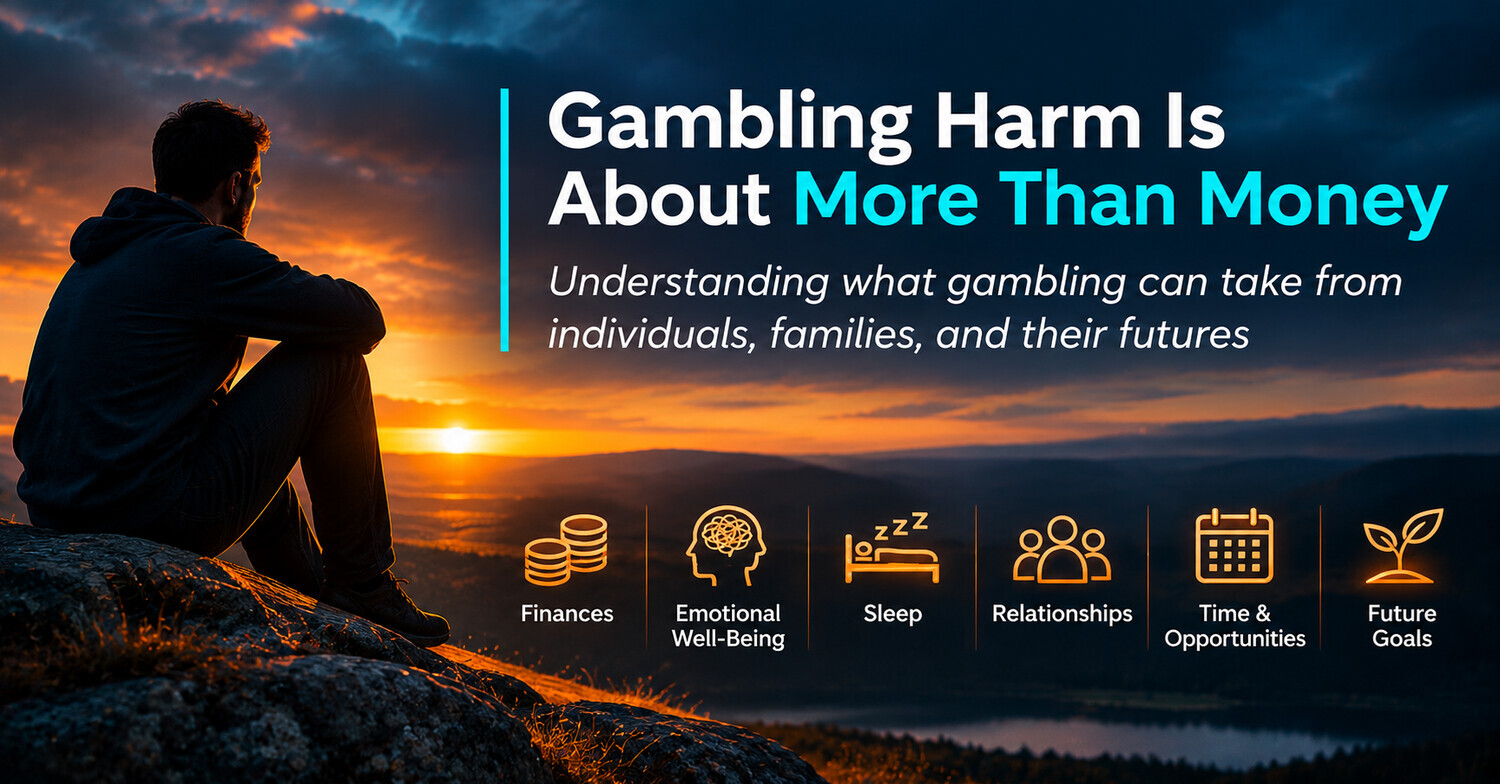
Someone may be experiencing significant emotional distress, disrupted sleep, relationship difficulties, or a growing loss of control long before they experience a financial crisis.
Others may have already experienced substantial financial harm without anyone around them knowing.
In my clinical experience, understanding gambling-related harm requires looking beyond the amount of money someone has lost. We need to consider what those losses represent, how gambling has affected different areas of their life, and what may be contributing to the behaviour.
Money Matters Because of What It Represents
When discussing gambling-related harm, I think it's important that we don't unintentionally minimize financial losses by emphasizing other consequences.
Money is not simply a number in someone's bank account.
It represents security, independence, opportunity, and the ability to participate in everyday life.
Money allows us to maintain housing, purchase food, access transportation, participate in recreation, and care for ourselves and the people who depend on us.
It also allows us to plan for the future.
Someone may be saving for retirement, their children's education, a family vacation, a home, or simply the peace of mind that comes from knowing they have resources available when unexpected expenses arise.
When gambling consumes those resources, the consequences extend beyond the immediate financial loss.
A person may lose the ability to participate in activities they enjoy, provide opportunities for their children, maintain their independence, or pursue goals they have worked toward for years.
For some individuals, financial losses can affect their access to essential services or their ability to meet basic needs.
For others, the consequences may involve opportunities that are no longer available.
Two people could lose the same amount of money through gambling and experience very different levels of harm depending on their financial circumstances, responsibilities, and what that money represented in their lives.
This is why the amount lost, on its own, cannot tell us the full story.
The Harm May Be Significant Before Anyone Recognizes It
Gambling-related harm is not always immediately apparent.
Someone may continue working, paying their bills, and maintaining their usual responsibilities while experiencing increasing difficulties with gambling.
They may be using savings, credit, or borrowed money to cover losses without the people around them knowing.
In other situations, the financial consequences may not yet be severe, but gambling has already begun affecting their emotional well-being, relationships, or daily functioning.
Family members may recognize that something has changed without understanding what is happening.
A partner may notice that someone has become increasingly distracted, irritable, withdrawn, or less emotionally available.
They may experience growing disconnection in the relationship without realizing that gambling is contributing to it.
The person gambling may also struggle to recognize the extent of the harm.
Changes in spending, time spent gambling, emotional responses, or daily routines can develop gradually.
What initially seemed manageable may become increasingly difficult to control.
By the time gambling-related difficulties are acknowledged or disclosed, the consequences may have been developing for a considerable period.
This is one reason why we should not rely exclusively on financial crises or obvious external consequences to determine whether gambling has become harmful.
The Emotional Weight of Gambling
Gambling-related difficulties can carry a substantial emotional burden.
People may experience anxiety, frustration, guilt, shame, regret, or fear about what might happen if their gambling becomes known.
For some, gambling begins as an enjoyable recreational activity but gradually becomes associated with increasing stress and emotional distress.
They may find themselves preoccupied with previous losses, future gambling opportunities, or the consequences of their behaviour.
Others may begin using gambling to escape difficult emotions or circumstances.
Someone experiencing stress, loneliness, boredom, or dissatisfaction may find that gambling temporarily provides excitement, distraction, or relief.
The difficulty is that the relief may be short-lived.
When gambling creates additional financial, relational, or emotional consequences, the circumstances someone was trying to escape can become even more difficult.
This can create a cycle in which gambling contributes to distress while also becoming one of the ways the individual attempts to manage that distress.
Shame can make the situation particularly challenging.
Someone may recognize that their gambling is causing harm but feel embarrassed about admitting it.
They may worry about being judged, disappointing loved ones, or being viewed as irresponsible.
These feelings can contribute to secrecy, withdrawal, and delays in seeking support.
Understanding these emotional experiences does not remove personal responsibility for gambling-related decisions. It helps us recognize why acknowledging difficulties and making changes can be more complicated than they may initially appear.
When Gambling Becomes Both the Financial Problem and the Perceived Solution
One of the more complicated aspects of gambling-related harm is the relationship between financial losses and the motivation to continue gambling.
With many harmful behaviours, the consequences eventually become reasons to stop.
With gambling, financial losses can sometimes become a powerful reason to continue.
Someone may recognize that they have lost more money than they can reasonably replace through their regular income.
They may be facing substantial debt, depleted savings, or the possibility of losing their home.
At some point, they may begin believing that the only way to recover financially within a meaningful amount of time is to win the money back through gambling.
The behaviour that contributed to the financial crisis begins to feel like the only possible solution.
The person may understand that continued gambling is risky. They may recognize that previous attempts to recover losses have made things worse.
Yet the possibility of a substantial win can become increasingly compelling when compared with the reality of repaying debt over many years or accepting that certain financial goals may no longer be achievable.
The hope of winning becomes closely connected to the hope of restoring the future they believe they have lost.
This helps explain why chasing losses can become so powerful.
Stopping gambling may be necessary to prevent further harm, but the person may also need support accepting financial losses, managing uncertainty, developing realistic financial plans, and grieving the future they believed gambling could restore.
It is important to distinguish between the possibility of winning and the likelihood of recovering losses.
Gambling is not a reliable financial recovery strategy, and continued gambling can deepen the very difficulties someone hopes to resolve.
The Loss of Sleep and Its Consequences
One of the everyday harms I believe deserves much more attention is sleep.
In my clinical experience, disrupted sleep is a common concern among people experiencing gambling-related difficulties.
Online gambling has made it possible to gamble at almost any time, including late at night when someone is alone, unable to sleep, or experiencing heightened urges.
Someone may stay awake longer than intended because they are gambling, monitoring outcomes, or trying to recover losses.
Others may lie awake thinking about money they have lost, worrying about the consequences, or anticipating their next opportunity to gamble.
Over time, this can interfere with sleep routines and contribute to ongoing fatigue.
And poor sleep rarely affects only one area of life.
Insufficient sleep can make it harder to concentrate, manage emotions, make decisions, maintain patience, and function effectively throughout the day.
Someone who is already experiencing stress because of gambling may find those difficulties harder to manage when they are consistently exhausted.
Their relationships may become more strained. Their work performance may suffer. They may have less energy for family responsibilities, recreation, or physical activity.
Sleep difficulties can also become part of a reinforcing cycle.
A person who is awake late at night may have more opportunities to gamble. Gambling may then keep them awake even longer, while the resulting fatigue makes the following day more difficult.
Sleep therefore deserves attention as an important part of someone's overall functioning, rather than being treated as a minor or secondary consequence.
The Loss of Trust, Including Trust in Yourself
Trust is another area where gambling-related harm can be particularly painful.
We often think about trust in terms of relationships.
A partner discovers that gambling has been concealed. A family member learns that money was borrowed without their knowledge. Someone finds out that financial information they relied upon was incomplete or inaccurate.
These experiences can create substantial damage.
But there is another form of trust that can be affected: the trust someone has in themselves.
An individual may repeatedly tell themselves that they will stop gambling, reduce their spending, or avoid certain situations.
They may genuinely intend to follow through.
When they find themselves returning to gambling despite those intentions, they can begin questioning their own judgment and ability to make decisions.
They may wonder why they continue doing something they recognize is harming them.
Over time, this can contribute to shame, reduced confidence, and a sense of helplessness.
Rebuilding trust therefore involves more than repairing relationships with other people.
It can also involve developing confidence in one's ability to make decisions, establish boundaries, follow through on commitments, and respond differently when experiencing urges or difficult emotions.
That process takes time.
And it is rarely accomplished simply by resolving the financial consequences of gambling.
Grieving the Future That Was Lost
One aspect of gambling-related harm that I believe deserves greater recognition is grief.
We typically associate grief with the death of someone we love.
But people can also experience grief when they lose important parts of their lives, their sense of security, their relationships, or the future they had imagined.
For someone experiencing gambling-related harm, this can take many forms.
It may involve recognizing that retirement will need to be delayed.
It may mean accepting that a home can no longer be maintained.
It may involve realizing that money intended for children's education, family experiences, or long-term goals is no longer available.
For some, the loss may involve a marriage or relationship that has been seriously damaged.
Others may grieve the time they spent gambling instead of participating in meaningful experiences with their families, pursuing interests, or building their careers.
There can also be grief associated with identity.
Someone who previously viewed themselves as financially responsible, trustworthy, or dependable may struggle to reconcile that understanding of themselves with the consequences of their gambling.
Family members can experience their own grief.
A spouse may feel that the future they had planned together has changed without their knowledge or consent.
They may be grieving financial security, trust, shared dreams, or the relationship they believed they had.
These experiences are not always recognized as grief, but they can involve many of the same feelings: sadness, anger, disbelief, regret, and uncertainty about what comes next.
Recognizing this matters because recovery is not always about returning to the life someone had before.
Sometimes that life cannot be fully restored.
Part of moving forward may involve acknowledging what has been lost, accepting what cannot be changed, and gradually building a different future.
That can be painful, but it can also be an important part of meaningful recovery.
The Activities and Opportunities That Gambling Replaces
Another important harm is the loss of time.
Gambling can gradually take up more space in someone's life, not only through the time spent actively gambling but also through thinking about gambling, researching opportunities, monitoring results, or planning future activity.
This can displace other things that matter.
Someone may stop participating in hobbies they once enjoyed.
They may spend less time with friends or family.
They may become distracted during activities because they are checking betting outcomes or thinking about gambling.
They may lose interest in other forms of recreation because gambling has become their primary source of excitement.
These changes can happen gradually enough that they are difficult to recognize.
But over time, a person's life may become increasingly organized around gambling.
There may be no immediate financial consequence associated with missing a family gathering, withdrawing from a friendship, or abandoning a hobby.
Yet those experiences contribute to someone's relationships, sense of belonging, and quality of life.
Understanding these losses means considering not only what gambling has taken away, but also the experiences and opportunities it may have prevented someone from pursuing.
Understanding the Behaviour, Not Just Removing It
Recognizing gambling-related harm is an important starting point.
But recognizing harm is not the same as understanding why gambling has become problematic.
If our only intervention is to address someone's financial difficulties, we may leave the gambling behaviour itself unchanged.
And if our only intervention is to remove gambling without understanding the role it has been playing, we may leave important underlying needs or difficulties unaddressed.
For example, if someone has been using gambling to escape stress, stopping gambling does not automatically resolve the stress.
If gambling has become their primary form of recreation, removing it may leave a significant gap in their daily life.
If someone has been using gambling to manage loneliness, boredom, or difficult emotions, those experiences may continue even after gambling stops.
Without understanding these factors, the individual may struggle to maintain changes or may seek relief through other behaviours that create additional difficulties.
This does not mean everyone who experiences gambling-related harm has an underlying mental health condition or that gambling is always a response to emotional distress.
For some individuals, gambling is primarily driven by excitement, competition, habit, social involvement, or the pursuit of financial rewards.
The point is that we need to understand the function gambling serves for that particular person.
That understanding helps us identify meaningful alternatives, address contributing difficulties, and develop strategies that fit the individual's circumstances.
It's also why I believe effective intervention needs to go beyond simply asking someone to stop gambling, or focusing exclusively on stopping the behaviour.
We need to understand what they are trying to change, what makes that change difficult, and what needs to be different in their life for the change to be sustainable.
Personal Responsibility Within a Gambling-Saturated Environment
Individuals are responsible for the decisions they make, including decisions about gambling.
Recognizing the influence of advertising, accessibility, and gambling product design does not eliminate that responsibility.
But personal responsibility is not the entire story.
We have created an environment in which gambling is increasingly accessible, highly promoted, and integrated into activities that were previously separate from it.
Online gambling allows people to access gambling products from their phones at almost any hour.
Sports betting advertising and promotions can make gambling difficult to avoid, particularly for people who enjoy watching sports.
Bonuses, notifications, and other promotional features can encourage continued engagement.
And while tools such as self-exclusion, deposit limits, and other protective measures exist, their availability, effectiveness, and limitations vary.
For individuals trying to reduce or stop gambling, the surrounding environment can create ongoing challenges.
People have responsibility for their decisions, and gambling environments can influence those decisions.
A balanced approach recognizes both. It neither removes individual accountability nor overlooks the conditions in which gambling occurs.
That distinction matters for how we approach prevention, intervention, and public policy.
Recovery Means More Than Stopping Gambling
When someone begins making changes to their gambling, reducing or eliminating the behaviour may be an important goal.
But the broader consequences of gambling may require attention long after the behaviour changes.
Financial difficulties may remain.
Relationships may need time to heal.
Sleep routines may need to be rebuilt.
Someone may need to reconnect with meaningful activities, address emotional difficulties, or regain confidence in themselves.
For others, moving forward may involve learning how to live with financial losses that cannot realistically be recovered.
This is also where individualized goals matter.
Some people may choose to reduce their gambling and establish strategies to minimize harm. Others may decide that abstinence is the most appropriate goal for their circumstances.
I do not believe abstinence and harm reduction need to be understood as opposing approaches.
Abstinence can be understood as one option within a broader harm-reduction approach.
The important consideration is identifying goals and strategies that appropriately address the individual's risks, circumstances, and desired outcomes.
For someone whose gambling has caused substantial harm or who has repeatedly struggled to maintain limits, abstinence may offer the clearest pathway to preventing further gambling-related consequences.
For others, reducing gambling involvement and implementing protective strategies may be an appropriate starting point.
These decisions should be informed by an honest understanding of the person's experiences, the potential risks, and what they hope to achieve.
We will explore these approaches in greater detail in a future article.
Ultimately, recovery is not measured solely by whether someone gambles. It also involves the changes they make in their daily life, their relationships, their well-being, and their ability to pursue what matters to them.
You Do Not Need to Reach a Crisis Before Seeking Support
One concern with focusing primarily on financial losses is that it can create the impression that gambling only becomes a problem when someone has lost a substantial amount of money.
That is not the case.
A person may be experiencing significant emotional distress, disrupted sleep, relationship conflict, or difficulty controlling their gambling long before they face a financial crisis.
You do not need to meet the criteria for gambling disorder or reach a particular financial threshold before your concerns deserve attention.
It may be helpful to ask yourself:
-
Is gambling affecting my sleep, emotional well-being, or ability to concentrate?
-
Am I spending more time gambling or thinking about gambling than I would like?
-
Has gambling begun interfering with my relationships, responsibilities, or interests?
-
Am I gambling to recover money I have already lost?
-
Have I begun hiding aspects of my gambling from people close to me?
-
Am I finding it difficult to follow through on decisions to reduce or stop gambling?
-
Do I feel that gambling is affecting the future I want for myself or my family?
These questions are not a diagnostic test.
They are opportunities to reflect on whether gambling is having an impact that deserves closer attention.
Seeking support does not require having all the answers or knowing exactly what changes you want to make.
Sometimes the first step is simply understanding what is happening.
Looking Beyond the Financial Losses
When we talk about gambling-related harm, financial losses are often the easiest consequences to recognize. But they rarely tell the whole story.
Understanding the impact of gambling means recognizing not only what someone has lost, but also what gambling has come to represent in their life, what has contributed to its continuation, and what may be needed to move forward.
Addressing gambling-related harm requires more than stopping the financial losses or the gambling itself. It requires understanding the person, the behaviour, and the circumstances surrounding it.
Because meaningful change isn't simply about what someone stops doing. It's also about what they can begin rebuilding.
Michael Fish
Contact Me