How much screen time is too much?
It's a question many people ask when thinking about their relationship with technology. Parents may worry about how long their children spend on devices, partners may question each other's habits, and individuals may wonder whether their own technology use has become unhealthy.
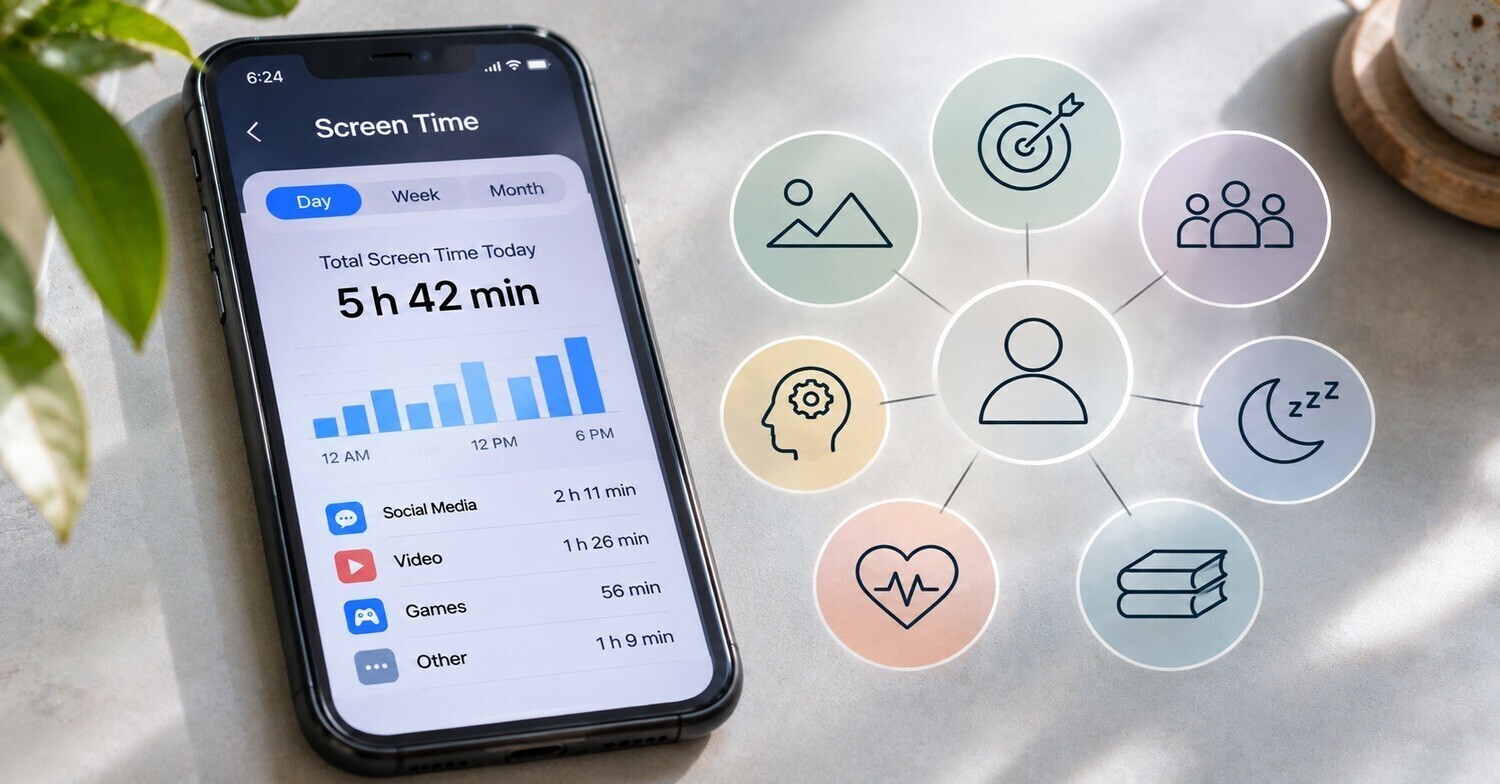
Smartphones, tablets, and computers make it easy to monitor how much time we spend using technology. We can review daily reports, compare our habits, and establish limits. These measurements can be useful, but they cannot tell us everything.
Two people may spend the same amount of time using technology while experiencing very different benefits and consequences. Even someone who spends relatively little time online may experience meaningful difficulties. Understanding technology use therefore requires considering what someone is doing, why they're doing it, and how it affects their life.
What Does Screen Time Actually Tell Us?
Screen-time reports measure how long we use our devices or particular applications. They can help us recognize patterns, but they don't explain what those activities mean in someone's life.
Imagine two people who each spend six hours using their phones. One spends time communicating with family, navigating to appointments, completing work-related tasks, and watching videos. The other spends most of that time scrolling through social media, repeatedly checking notifications, or engaging in activities they intended to stop much earlier. Their screen-time totals may be identical, but their experiences are different.
Technology is also essential to many people's employment, education, healthcare, communication, and everyday responsibilities. Someone who works remotely or studies online may spend much of their day using a screen without that use being recreational. For individuals with disabilities, limited mobility, or other accessibility needs, technology may provide essential opportunities for independence, connection, and participation in daily life. High screen-time totals should therefore be interpreted cautiously, rather than treated as evidence of a problem.
The circumstances surrounding technology use also matter. Spending an evening watching a television series may be an intentional recreational choice. By contrast, a person who spends less time online may regularly interrupt conversations, postpone responsibilities, or stay awake much later than intended.
When Does Technology Use Become Concerning?
Rather than focusing exclusively on a screen-time limit, it can be more useful to consider whether technology is contributing to identifiable difficulties. Areas to consider include:
-
Sleep: Regularly staying online later than intended or experiencing ongoing sleep disruption.
-
Responsibilities: Technology use repeatedly interfering with school, employment, household commitments, or other obligations.
-
Relationships: Persistent difficulties involving communication, shared time, or meaningful connection.
-
Attention: Frequent interruptions from applications or notifications that make important activities difficult to complete.
-
Control: Repeatedly struggling to disengage from technology despite wanting to change.
-
Personal priorities: Consistently postponing activities, relationships, or goals that someone values.
These are areas worth exploring, not a diagnostic checklist. Some may indicate existing harm, while others may identify patterns worth addressing before more serious difficulties develop.
Occasionally losing track of time while watching videos or scrolling through social media does not necessarily indicate a significant problem. Consider, however, someone who intends to spend 20 minutes on their phone before bed but repeatedly continues for two hours. They recognize that their sleep is being affected, have tried to change the pattern, and continue experiencing the same difficulties. Here, the concern involves difficulty following through on intentions and consequences that affect daily life, rather than the number of hours alone.
Even then, struggling to manage a particular habit does not automatically establish a behavioural addiction or clinical disorder. The persistence, severity, and impact of the difficulties need to be considered.
Why We Use Technology Matters
Technology can provide entertainment, relaxation, learning, creativity, social connection, and opportunities to develop new skills. Spending several hours learning an instrument through online tutorials, creating artwork with digital tools, communicating with distant relatives, or participating in a supportive online community can be meaningful and beneficial.
Recreation also does not need to produce a tangible accomplishment to have value. Watching videos, browsing social media, or playing games may simply be enjoyable ways to spend free time. We should not automatically assume that offline recreation is more worthwhile than digital recreation.
Understanding why someone uses technology can also help explain patterns that are becoming difficult to manage. A person experiencing stress, for instance, may increasingly use their phone to distract themselves from uncomfortable thoughts or responsibilities. This may provide temporary relief, but if the pattern repeatedly delays sleep, interrupts important tasks, or contributes to additional stress, technology use may become both a response to an existing difficulty and a contributing factor.
Loneliness offers a different example: a person may spend more time online because digital communities provide meaningful connection. Simply reducing screen time without understanding the person's social needs may overlook an important part of the picture.
Technology use does not always cause the difficulties associated with it. Sometimes it is a response to challenges that already exist, and sometimes both contribute to one another. Understanding these relationships can help individuals make changes that address the actual problem rather than focusing only on reducing hours.
Using Screen Time to Make Meaningful Changes
Screen-time reports can be useful tools when we interpret them alongside our circumstances, priorities, and experiences. A person who wants to improve their sleep might review when they use particular applications rather than simply trying to reduce their total daily screen time. For someone concerned about distractions, examining how often they check notifications during work or family activities may be more relevant.
Parents concerned about their child's technology use might consider sleep, school responsibilities, friendships, and emotional well-being rather than relying exclusively on a daily screen-time total. Age and developmental needs also matter: young children, adolescents, and adults have different responsibilities, needs, and capacities for managing technology use.
Canada's 24-Hour Movement Guidelines provide recreational screen-time recommendations as part of broader guidance about physical activity, sedentary behaviour, and sleep. These recommendations can be useful for supporting overall health, particularly for children and adolescents. However, exceeding a recommended limit does not automatically establish that someone has a behavioural addiction, just as remaining within a limit does not guarantee that their technology use is free from difficulties. Population-level health recommendations and individualized assessments answer different questions.
If you're concerned about your technology use or that of someone you care about, consider asking:
-
What activities account for most of the time spent using technology?
-
Is technology use interfering with sleep, relationships, responsibilities, or other important areas of life?
-
Am I generally able to stop or change my habits when I intend to?
-
Is technology supporting the things that matter to me, or repeatedly getting in their way?
Someone does not need to meet the criteria for a clinical disorder before seeking support. Counselling can help individuals and families explore specific concerns, understand contributing circumstances, and identify changes that support their well-being. The goal is not necessarily to achieve the lowest possible screen-time total, but to develop a relationship with technology that fits the individual’s needs, responsibilities, and priorities.
Screen time tells us how much. Understanding what someone does, why they do it, and how it affects their life helps us determine what those hours actually mean.

Michael Fish
Contact Me